Plant extracts, a sustainable and growing industry
Plant extracts are substances that are obtained from plants through specific methodologies and techniques. According to their characteristics, they can be used in the development of drugs, cosmetics or foods among others. "The plant extracts industry is promising and sustainable," says Dr. Guillermo Lotz, director of PROYAR Laboratory, with which CEPROCOR recently signed a collaboration agreement.
Plant extracts are chemical components present in plants, which contain what are called "active principles." These active principles possess a certain pharmacological action on the organism. Through specific technological development, they are used for the formulation of cosmetics, foods, medicines or organic agrochemicals.
The director of PROYAR Laboratory, Dr. Guillermo Lotz, expresses through countless examples how plant extracts are increasingly used for various applications. In sectors such as poultry or swine production, the use of plant extracts in the food and water consumed by animals is relevant. It helps maintain their health, their immune system, which enables more sustainable productions. For example, turmeric, artichoke and other components are used for such purposes.
A revolution in cosmetics has also occurred from the use of these extracts. Among various raw materials, one example is calendula, which can be used as a healing or antiseptic agent, widely used for babies or mothers.
The benefits of chamomile or aloe are also known. Regarding the latter, depending on the active principle used from the plant, it can become a laxative or a gastrointestinal protector. Lapacho or propolis, which have great impact on the immune system, "have been used extensively and with very good results during the pandemic period," asserts Dr. Lotz.
It should also be considered that plant extracts must be prepared by authorized laboratories and prescribed by health professionals, because although they may present fewer contraindications than other non-natural products, the doses must be appropriate when administered.
HOW ARE PLANT EXTRACTS OBTAINED?
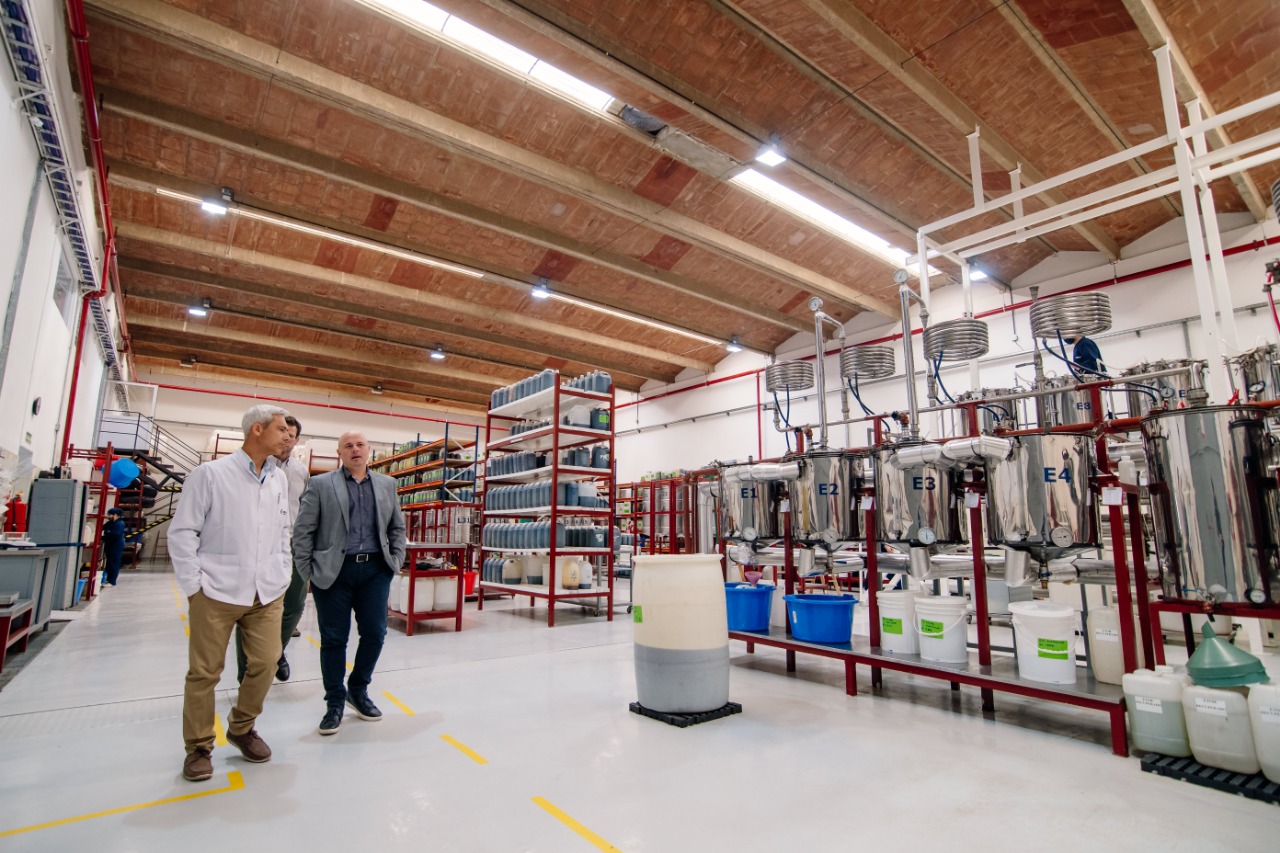
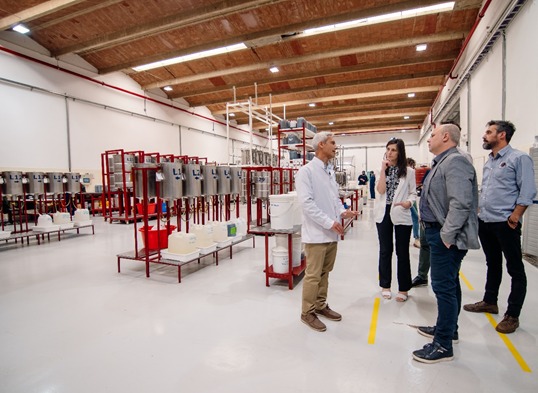
The plant drug is used, which is the part of the plant that -it is known- contains the active principles that are required. For example, that plant drug can be found -depending on each case- in a flower, in the stem of a plant or in a part of the leaf, in the bark or in the root. Those biological parts are conditioned in the laboratory and the extraction of the desired active principles is performed.
"Science has extensive knowledge regarding the chemical structures that plants contain and the actions they have on the organism. We control that those active principles are present in the plant drugs we use. In this way, we ensure that the raw materials have the necessary quality to later be used in the preparation of plant extracts. This control is carried out through different techniques and tests," explains the specialist. Once that plant extract is obtained, the product that contains it is developed, to be used according to the application for which it was planned.
AN ORGANIC PESTICIDE WITH EXPORT POSSIBILITIES-CEPROCOR CONTRIBUTIONS
Currently, Proyar Laboratory -among other diverse products- is developing an organic pesticide derived from a plant, with micro-nanostructure characteristics, with various formulation possibilities.
Dr. Lotz points out that "the advantage of an organic pesticide like this is, first of all, its effectiveness in attacking a specific pest. Furthermore, it is not aggressive to the environment, it is sustainable. It can be used over time, in different harvests. Moreover, when it degrades it can also become part of the plants' own food. That is, it can be considered as a fertilizer."
The formulation of this pesticide with micro-nano particles enables greater product effectiveness and the doses used are lower.
The pesticide can be used by both the agricultural sector and the domestic sector, and even by those who have their own organic gardens, whether for their own consumption or for small communities, for example.
"Something interesting, from the commercial point of view, is that being organic it has no restrictions to enter international markets," indicates Dr. Lotz. On the other hand, it should be noted that a growing movement of consumers interested in products of natural origin is observed, which makes this type of development a relevant market niche.
For the development of this product, PROYAR laboratory had the contribution of CEPROCOR. Work was done on a project aimed at achieving micro-nanometric structures (very small particles) capable of containing the extract inside. "The structures are like small pouches," explains Bioq. Mauricio Turco, a Center scientist who worked on the study. These structures are formed by other compounds. At this point, Ceprocor's studies focused on observing how these possible compounds for assembling the structure interact with the extract, to then obtain an effective product. Ceprocor also contributed other studies related to product stability, among other activities.
Regarding this project, the Center researcher noted: "Participation in studies like this strengthens the local knowledge tool, generated through many years of work. Furthermore, it allows us to consolidate our role and direct it toward the horizons envisioned by our industries and economies."
A PROMISING AND SUSTAINABLE MARKET NICHE
"I believe that the future for products of natural origin, and plant extracts in particular, is very promising. We must continue researching and developing. This type of industry is not incompatible with other types of industries, but rather comes to contribute with a more sustainable human activity for the planet, preserving the environment, our generations and future generations. We have to evolve in that direction: copying and learning from nature. Nature always optimizes resources. It doesn't waste energy but uses only what is strictly necessary," expresses the director of Proyar.
COLLABORATION AGREEMENT WITH CEPROCOR
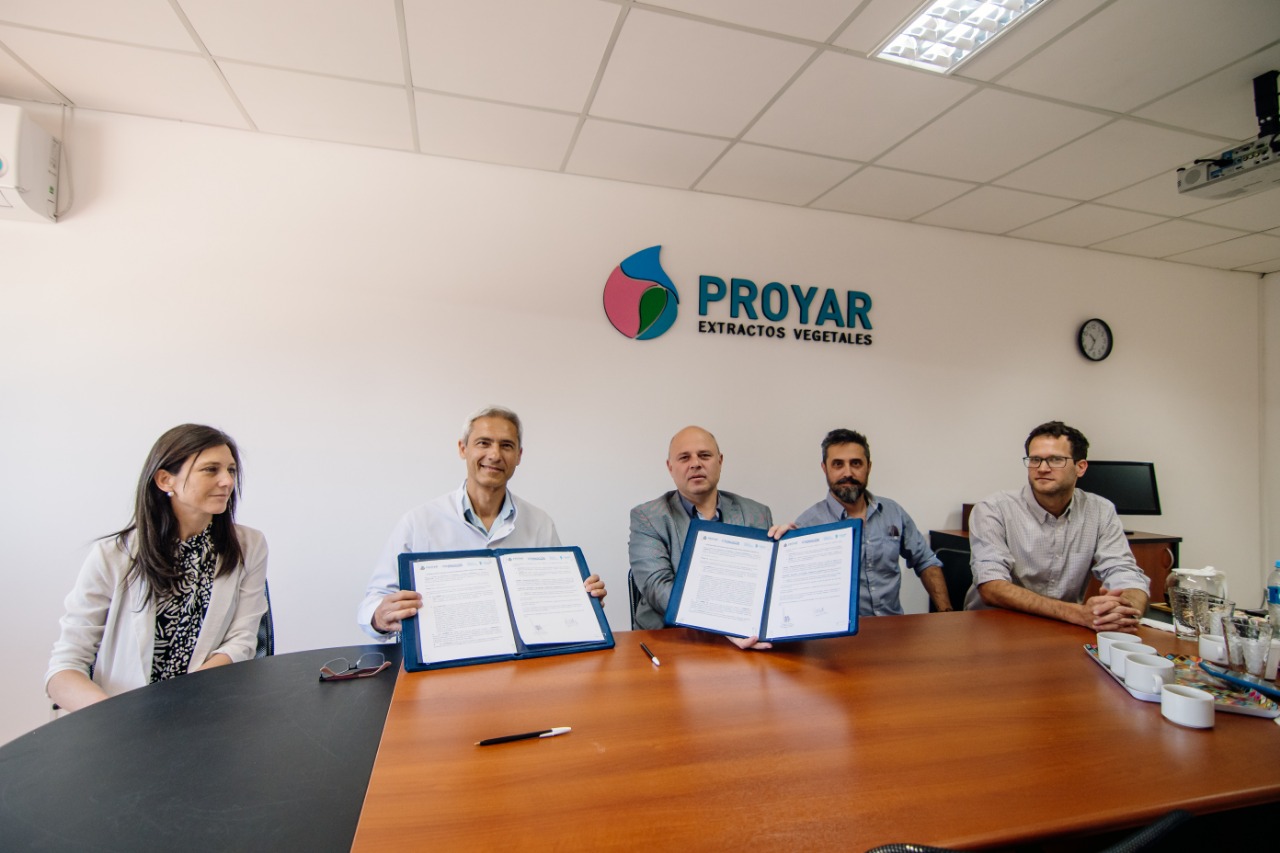
Proyar's connection with CEPROCOR dates back several years. Nevertheless, a collaboration agreement was recently signed, through which continuity is given to collaborative work and formalizes activities of technical assistance, studies and specific analytical characterizations; development, validation and transfer of analytical methodologies; collaborative research and development (R&D) projects; articulation for the presentation and joint management of external financing for the execution of joint projects, among others.
The agreement was signed by the Minister of Science and Technology Pablo De Chiara and Dr. Guillermo Lotz, director of PROYAR laboratory. The Vice-President of CEPROCOR, Federico Priotti; the Director of Linkage, Luciana Beladelli and researcher Mauricio Turco, coordinator of the Analytical Separations Unit of CEPROCOR, who participated in the latest developments transferred to the company, were present.
"It is very important that these types of scientific-technological institutions exist, public or public-private for the SMEs and industry of Córdoba. This allows for greater competitiveness to be generated both among local companies and those from the rest of the country. We have to insert ourselves within international production. For this we need technological tools to achieve even greater competitiveness. In this sense, CEPROCOR or other technological centers are also important," expressed Dr. Lotz in Conversations – 30 years of Córdoba Science and added: "With these types of scientific-technological institutions we can advance tremendously and achieve new products, innovate, improve efficiency or processes that already exist."
Source: CEPROCOR


